














The Scientific Analysis and Spiritual Significance of Lunar Eclipses: A Catalyst for Transformation and Rebirth
IN THIS POST
- • The Principles and Causes of Lunar Eclipses
- • Types of Lunar Eclipses
- • What is the Difference Between a Solar and Lunar Eclipse
- • Does a Lunar Eclipse Affect Us?
- • Astrology and Lunar Eclipses
- • What Does a Lunar Eclipse Symbolize?
- • Observing and Photographing Lunar Eclipses
- • Recommended Accessories to Wear During a Lunar Eclipse
Lunar Eclipse: A Magic Show of Light and Shadow in the Universe
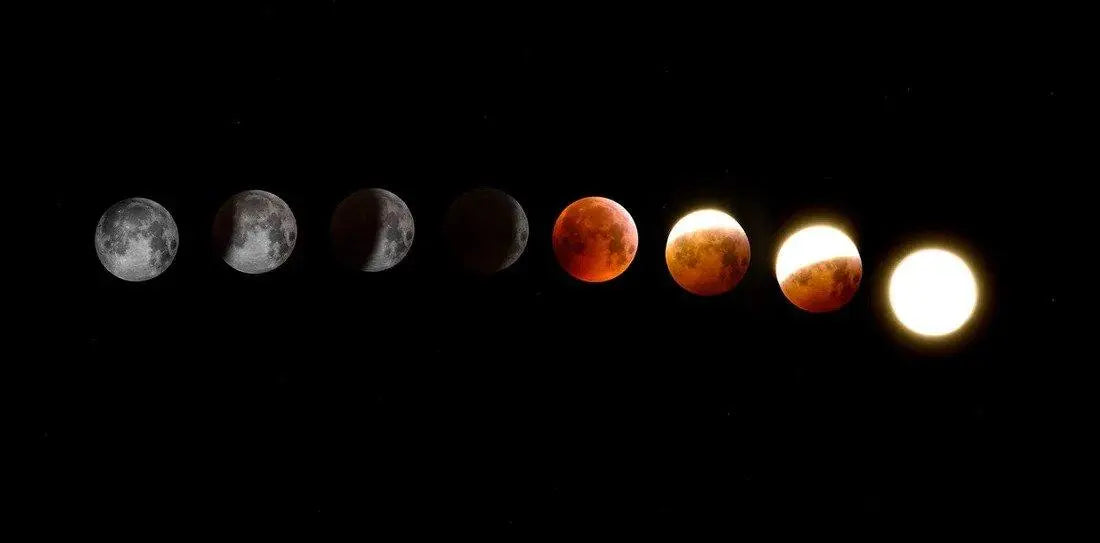
A lunar eclipse is a breathtaking astronomical phenomenon that occurs when the Moon enters the Earth's shadow, preventing direct sunlight from reaching the lunar surface. Have you ever gazed up at the night sky, stunned by the Moon gradually turning red? This astronomical marvel is not just a visual feast, but a vivid demonstration of the laws of the universe.
When the Moon enters the Earth's shadow, we can watch its surface transform from bright silvery-white to a deep red, like magic performed on the celestial stage. This fascinating color change occurs because the Earth's atmosphere refracts sunlight, allowing only red wavelengths to pass through and project onto the Moon's surface—which is why the Moon is often called a "red moon" or "blood moon" during an eclipse.
Imagine standing on Earth, looking up at a Moon covered by your own planet's shadow; you are witnessing the precise alignment of three celestial bodies—the Sun, the Earth, and the Moon. This phenomenon reminds us of the subtle laws of the cosmos and helps us realize our place in the vast universe.

Types of Lunar Eclipses: Total, Partial, and the Rare Penumbral Eclipse
There is more than one type of lunar eclipse. Based on how much of the Moon enters the Earth's shadow, they are classified as follows:
- Total lunar eclipse: Occurs when the Moon moves completely into the Earth's umbra. The Moon displays a fascinating red-orange glow. During a total lunar eclipse, the Sun, Earth, and Moon are perfectly aligned, with the Earth in the middle.
- Partial lunar eclipse: Occurs when only part of the Moon is covered by the Earth's shadow. The Moon appears as if it has had a "bite" taken out of it.
- Penumbral lunar eclipse: The Moon enters only the Earth's penumbra but not the umbra; the change in brightness is so subtle it is almost imperceptible to the naked eye.

Total Lunar Eclipse

Each type of lunar eclipse has unique visual effects and formation conditions. Understanding these differences helps us better appreciate and interpret these astronomical marvels. It is worth noting that no special tools or equipment are needed to view a lunar eclipse; just find a location far from city light pollution and look up at the dark sky.
Solar vs. Lunar Eclipses: Two Spectacular Sights in the Sky
Solar and lunar eclipses are two distinct but equally fascinating astronomical phenomena, each with unique formation mechanisms and observational experiences:
Difference in Formation Principles
A solar eclipse occurs when the Moon passes between the Sun and the Earth, blocking the Sun's rays. Conversely, a lunar eclipse occurs when the Earth passes between the Sun and the Moon, casting its shadow on the lunar surface. Simply put, a solar eclipse is "the Moon blocking the Sun," and a lunar eclipse is "the Earth blocking the Moon."
This difference leads to vastly different observational conditions. A solar eclipse can only be seen from a narrow strip on the Earth's surface, usually only dozens to hundreds of kilometers wide. A lunar eclipse, however, can be observed from anywhere on the night side of the Earth, covering a much larger area, which makes them more accessible to the general public.
Difference in Safety
There is a significant difference in safety. Looking at a solar eclipse directly with the naked eye is extremely dangerous and can lead to severe vision damage or even blindness. Observing a solar eclipse requires professional solar filters or projection devices. In contrast, observing a lunar eclipse is completely safe and requires no protective equipment, making it one of the most accessible astronomical events for the public and astronomy beginners.
Difference in Visual Experience
The visual experience of each is also quite different. During a total solar eclipse, the Sun is completely blocked, the sky darkens in an instant, temperatures drop, and animals may exhibit nocturnal behavior. In particular, the "diamond ring" and "Baily's beads" phenomena are coveted sights for many astronomy enthusiasts.

Annular Solar Eclipse
A lunar eclipse is a slow and elegant process: the Moon is gradually covered by the Earth's shadow, turning from bright silver to deep red. The entire process typically lasts several hours, giving observers plenty of time to enjoy and record it. The "blood moon" seen during a total lunar eclipse, with its rich red-orange glow, is equally beautiful.
 An actual photograph of a blood moon
Frequency and Rarity
There is also a difference in frequency. Solar eclipses occur about 2-5 times per year on Earth; however, because they are visible only in specific narrow regions, opportunities for an individual to see one—especially a total solar eclipse—are relatively rare.
In contrast, lunar eclipses occur slightly less frequently, about 2-4 times per year, but because they are visible across the entire hemisphere facing the Moon, individuals have more opportunities to observe them. This has left a deeper impression on folklore and mythology.
Lunar Eclipse Effects: Scientific Facts and Folklore
The impact of a lunar eclipse goes far beyond the visual spectacle. Scientifically, the Earth's atmosphere filters sunlight during an eclipse, providing valuable data about atmospheric composition, which astronomers often study. Meanwhile, as moonlight dims, the behavior of nocturnal animals may change, such as nocturnal species altering their activity patterns.
In folklore, lunar eclipses were often seen as bad omens. Ancient Chinese believed that a celestial dog was swallowing the moon, so people would beat drums and gongs to drive it away; in the Mayan culture of Central America, a lunar eclipse was a symbol of cosmic imbalance. While these legends are far from modern scientific understanding, they reflect human awe and imagination regarding unknown phenomena.
Interestingly, although science has fully explained the causes, many cultures still maintain special customs and taboos during a lunar eclipse. For example, some believe it is best not to go outside, not to eat, or to perform specific rituals to protect oneself. While these traditions lack scientific evidence, they remain valuable as cultural heritage.
The Mysteries of the Lunar Eclipse from an Astrological Perspective
In astrology, the Moon represents our deep emotional projection, and a lunar eclipse is seen as a moment of significant transformation. Astrologers believe the zodiac sign in which a lunar eclipse occurs will specifically impact the life areas associated with that sign. For example, a lunar eclipse in Taurus may impact financial and material security, while one in Gemini may impact communication and learning.
Astrological views suggest that the energy during a lunar eclipse is powerful, helping us release old patterns and welcome new possibilities. Interestingly, different signs experience the eclipse differently:
- Fire signs (Aries, Leo, Sagittarius) may feel strong creative impulses.
- Earth signs (Taurus, Virgo, Capricorn) may experience significant transformations in practical matters.
- Air signs (Gemini, Libra, Aquarius) may have breakthroughs in thought and communication.
- Water signs (Cancer, Scorpio, Pisces) may be deeply affected at an emotional and intuitive level.
During a lunar eclipse, as the Moon is covered by the Earth's shadow, human emotions and the subconscious are awakened. We are guided to understand what we need to let go of and what changes we should make.
Spiritual Meaning: A Catalyst for Transformation and Rebirth
LETTING GO OF THE PAST
The potential energy of a lunar eclipse peaks during a total eclipse. This is an excellent time to let go of past pain, cleanse accumulated emotions, and change negative thought patterns. Have you noticed some emotional baggage has followed you for too long? A lunar eclipse is the perfect time to bid it a proper farewell.
With every lunar eclipse, our emotional cycle is reset, revealing long-hidden feelings from the subconscious. Like when I once realized in awe during an eclipse that my attachment to a relationship stemmed entirely from a fear of rejection, not true love. As we grow, ending connections with some people and things is inevitable and necessary, and a lunar eclipse is the golden hour for handling such matters.
EMBRACING CHANGES
Ending something or saying a final goodbye may not be a bad thing. Cutting off the source of negative emotions frees up emotional space to welcome the new. Only then can we properly seize new opportunities when they arrive. Much like clutter can mess up a house, useless emotional baggage can clutter the mind.
Have you ever clung to a familiar but no longer beneficial relationship or habit out of fear of the unknown? The special energy of a lunar eclipse strengthens our courage to face change. The wisdom gained in one eclipse cycle can be internalized and deepened in the next. Remember, every change we work toward is meant to elevate our energy and empower our inner selves.
A Prime Time to Receive Cosmic Energy and Messages
It is easier to connect with the universe during a lunar eclipse, as the Moon's energy is amplified. Imagine a celestial savior extending a spiritual hand from the sky to guide you. The universe will point the way and lead you to where you need to be.
This is a golden time to step out of your comfort zone and grow into a better version of yourself. During an eclipse, the channels for receiving energy are more open, allowing for higher-frequency spiritual waves to be received. Helpful information is also better internalized during this time.
Difference in Spiritual Meaning: Solar vs. Lunar
In spirituality and astrology, solar and lunar eclipses carry different symbols. A solar eclipse is typically seen as a masculine energy transformation, representing external action, consciousness, and self-expression. It often heralds new beginnings and significant external changes.
A lunar eclipse relates to feminine energy, symbolizing transformations in internal emotions, the subconscious, and intuition. As discussed elsewhere, it is the perfect time to let go, organize emotions, and reorganize your inner world. This difference in energy application makes each unique in spiritual practice.
Whether solar or lunar, these spectacular astronomical phenomena remind us of the precision and beauty of the universe, and evoke awe and curiosity about the vast star-filled sky. When the next eclipse happens, be sure to observe this cosmic feast yourself and feel the rhythm of the universe that has remained accurate for thousands of years.
Observing and Photographing: A Practical Guide to Capturing Sky Miracles
Want to witness the splendor of a lunar eclipse in person? Unlike a solar eclipse, observing a lunar eclipse does not require special protective gear, making it one of the most beginner-friendly astronomical events. Every stage of a lunar eclipse can be easily viewed in certain parts of the Earth, particularly in most of Central and South America, Western Europe, Africa, and most of North America.
Choosing the right location and time is crucial. Suburbs far from city light pollution or high-altitude areas are usually best, and using binoculars or a small telescope can reveal more detail. However, even with the naked eye, the sight is magnificent.
For photography enthusiasts, a lunar eclipse is a great opportunity to practice astrophotography. Using a tripod, telephoto lens, and manual exposure settings, you can capture the entire process. Notably, because the light dims during a total lunar eclipse, it is the best time to photograph the red moon against a starry background. Imagine a photo featuring both a red moon and a brilliant starry sky—a perfect commemoration of cosmic beauty.
AWNL Crystals and Jewelry Suited for Lunar Eclipse Energy
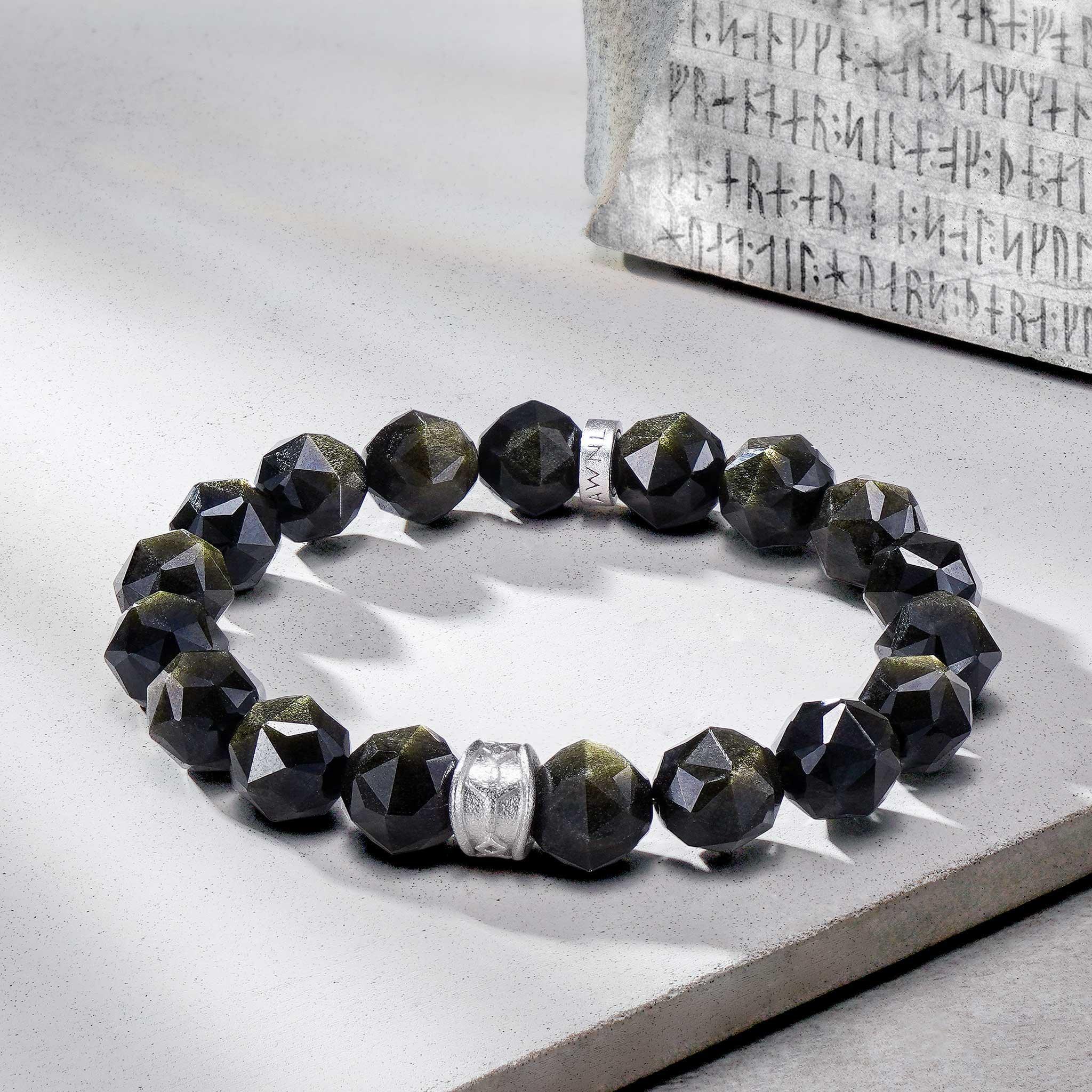
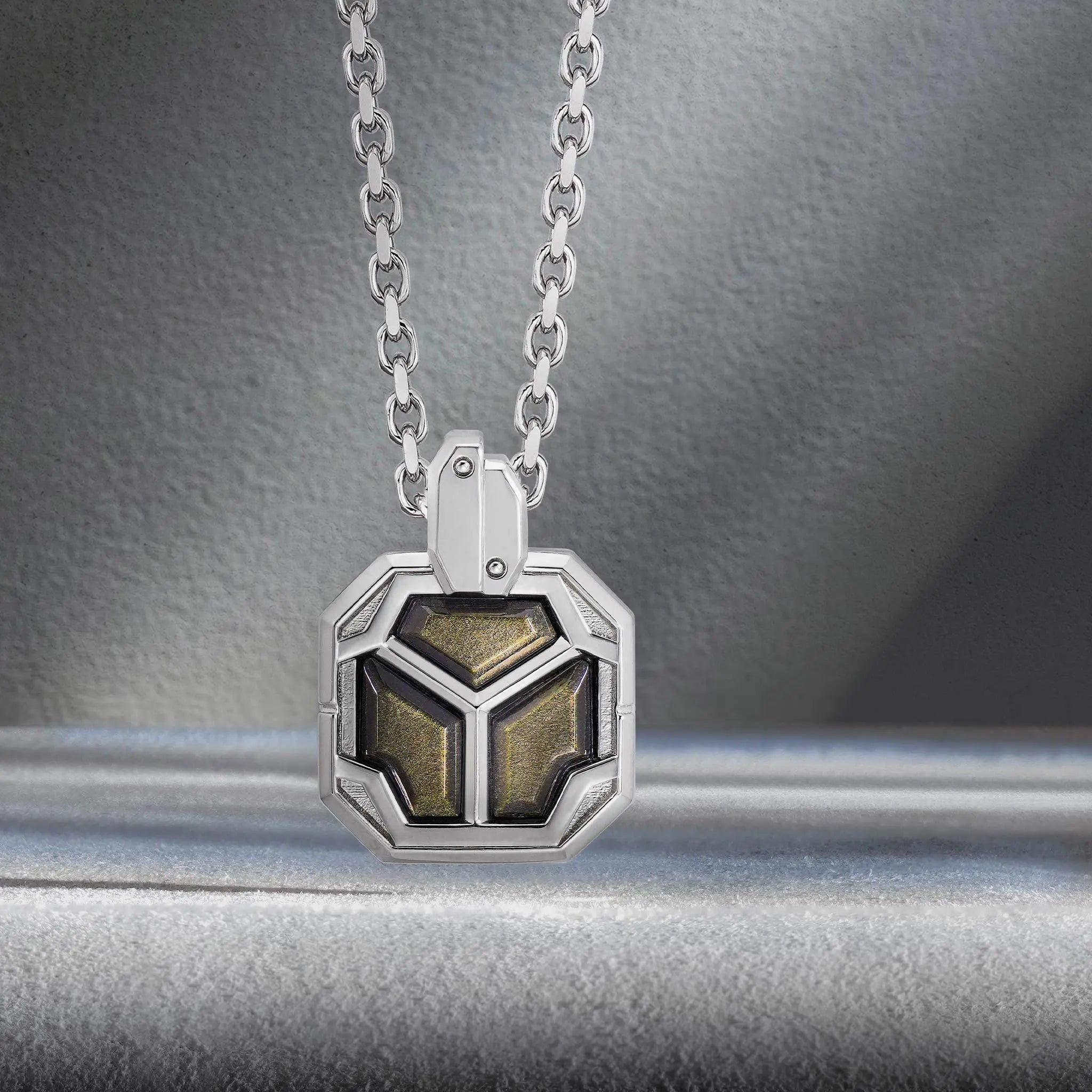
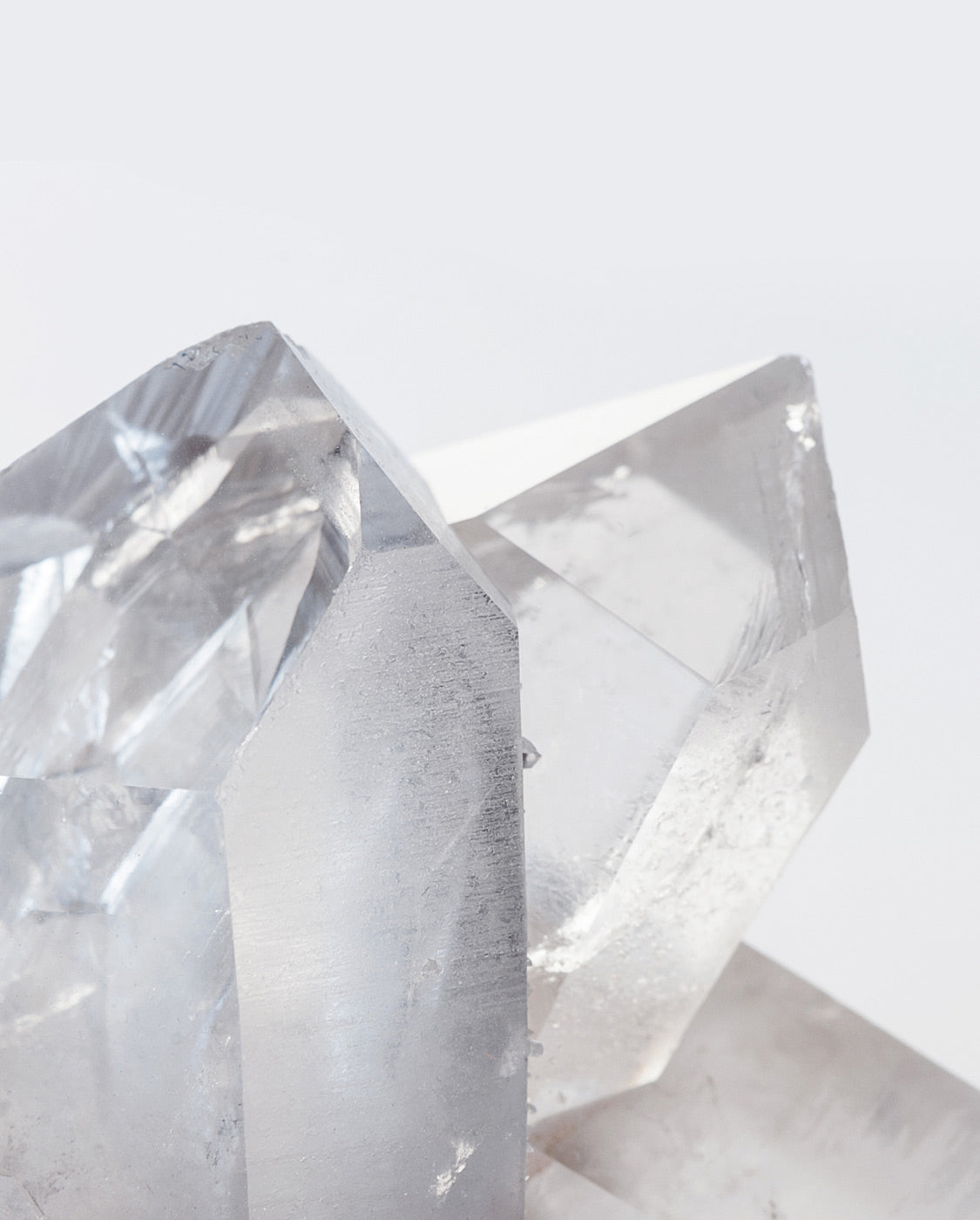
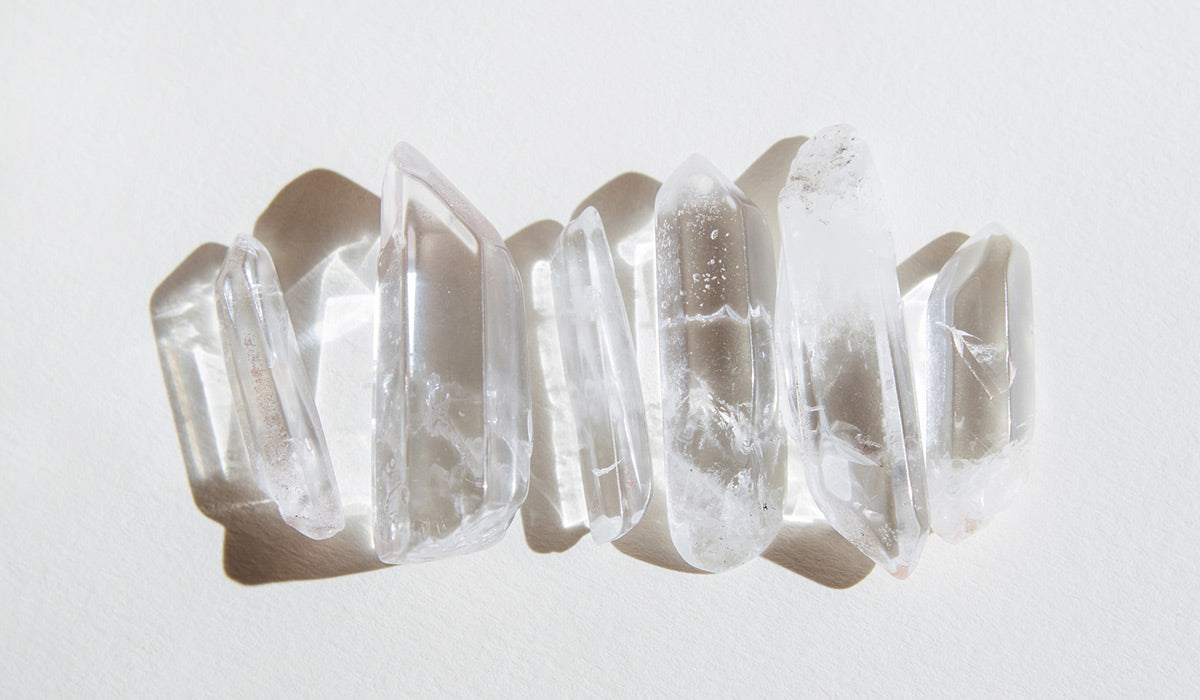
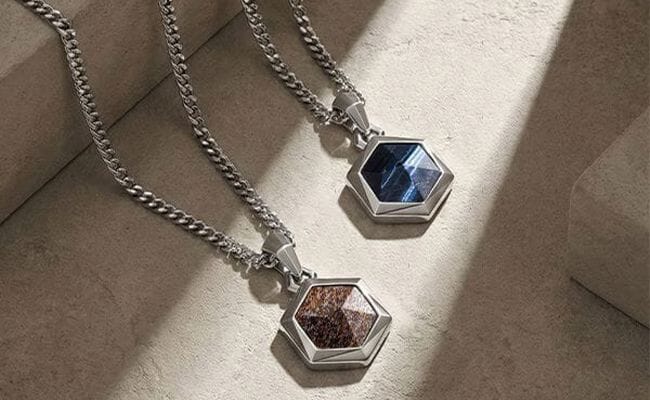
When selecting crystals to match the energy of a lunar eclipse, grounding crystals that represent darkness are the first choice, including any black or yellow crystals; obsidian is particularly recommended. Obsidian is a guiding stone, known as the "warrior of truth," which can reveal dark areas of the subconscious and force you to face your inner self.
Gold sheen and silver sheen obsidian are the rarest varieties, containing slight air bubbles with golden or silver elements on the surface. It is said that these stones provide the energy of both the Sun and the Moon, making them the perfect match for the energy of a lunar eclipse.

A lunar eclipse has special spiritual significance, and the energy during this time is different from usual. Rather than just using crystals to harness the Moon's energy, try meditating and focusing on your own breathing. A lunar eclipse symbolizes spiritual and emotional transformation; this time is best used for processing emotional volatility, allowing you to embrace change and become a better version of yourself.
AWNL Time Capsule Silver Sheen Obsidian Men's Necklace

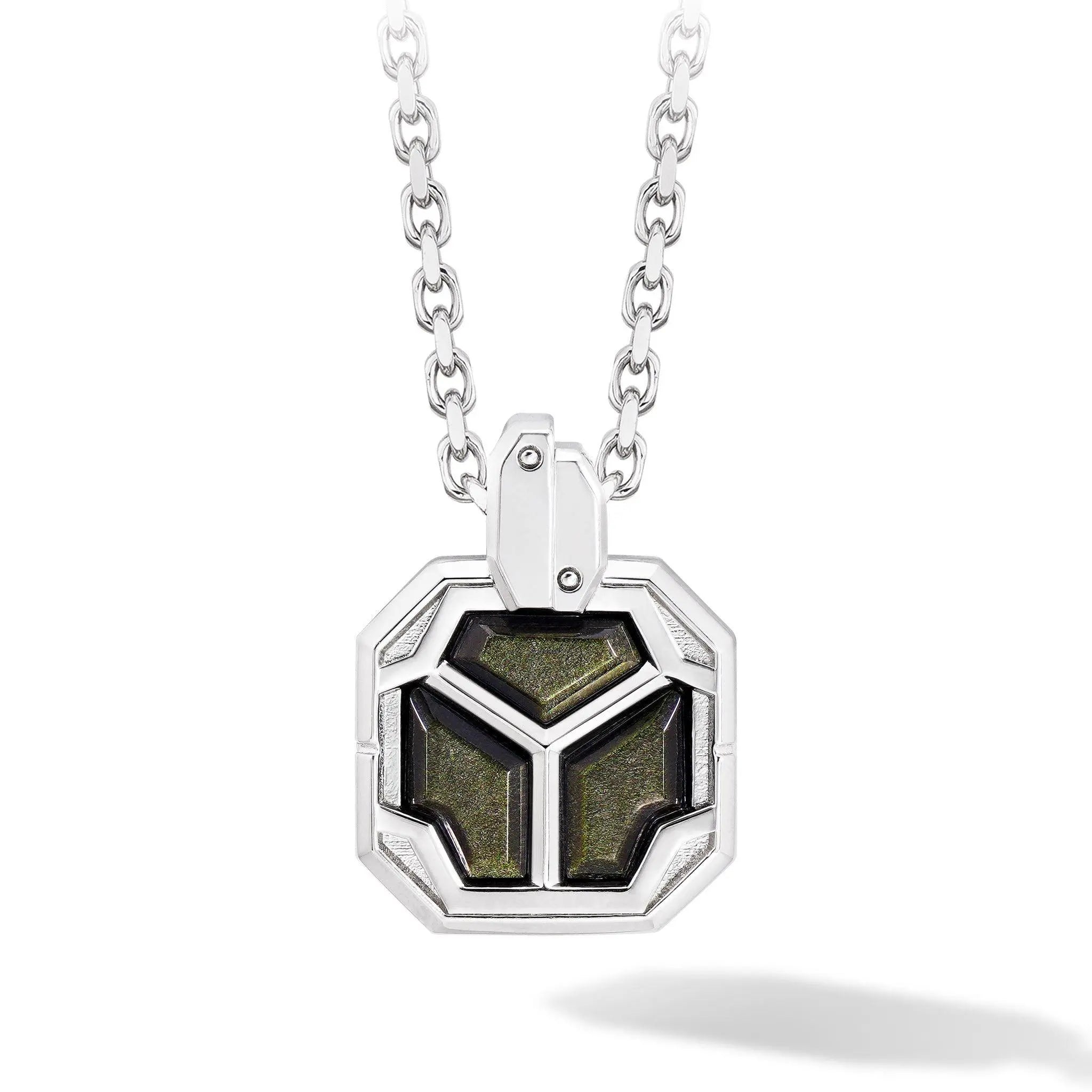
Inspired by the concept of time travel, this necklace establishes a connection between the present, past, and future, conveying messages from your past self to your future self. The combination of the hollow pattern and silver sheen obsidian is perfect for meditation and enlightenment. Just as a lunar eclipse symbolizes a special point in time, this necklace reminds the wearer to cherish every opportunity for transformation.
AWNL Seraph Wing Silver Sheen Obsidian Men's Necklace

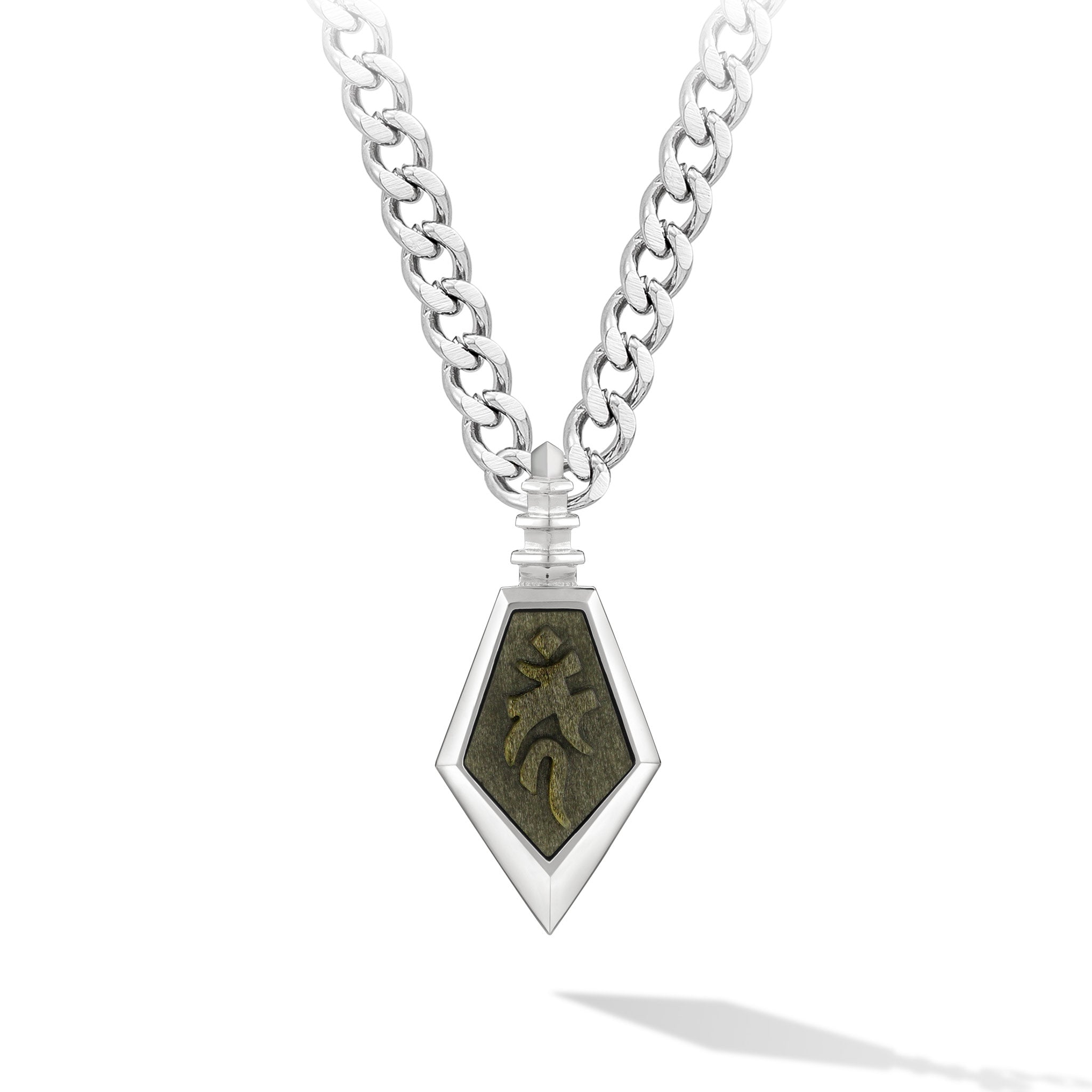
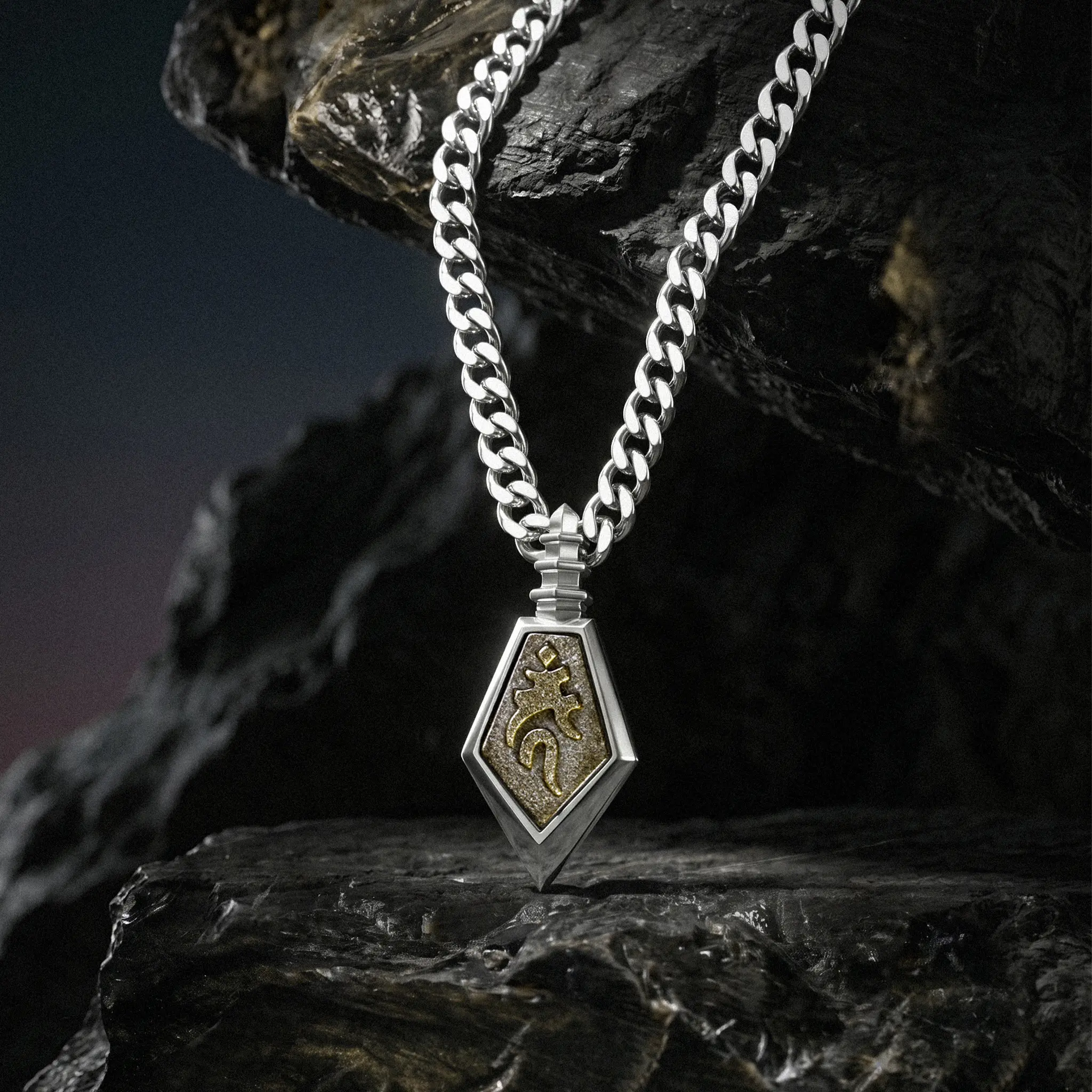
Silver sheen obsidian is the rarest type of obsidian and has deep roots with the Moon. Seraphs are the highest order of angels; the design of the silver sheen obsidian and seraph wings echoes each other, carrying cosmic messages and guiding the wearer in the right direction. During the unique celestial event of a lunar eclipse, wearing this necklace can enhance your ability to receive cosmic messages.
AWNL Swedish Meteorite Moon Mini Flying Saucer Women's Necklace

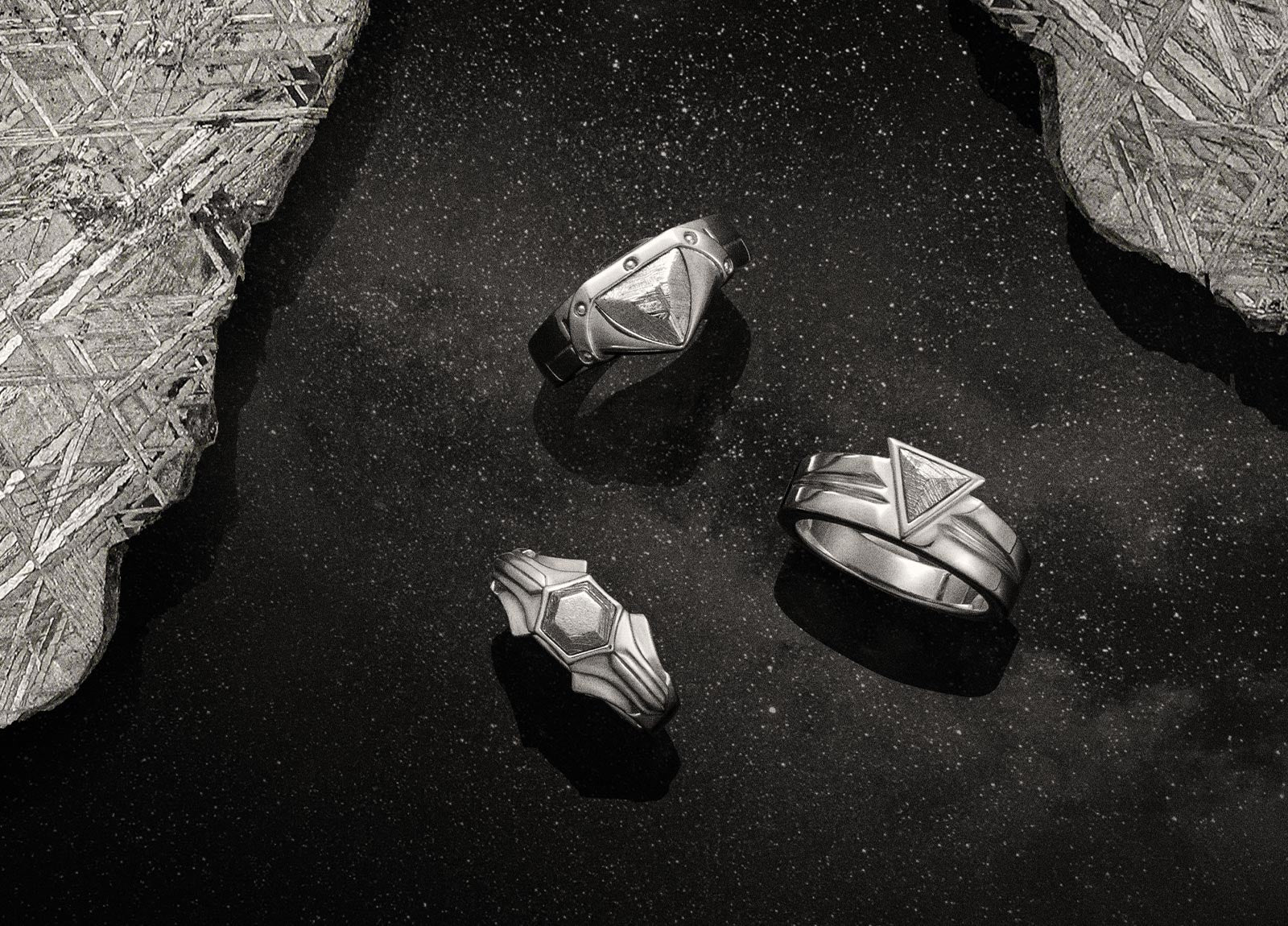
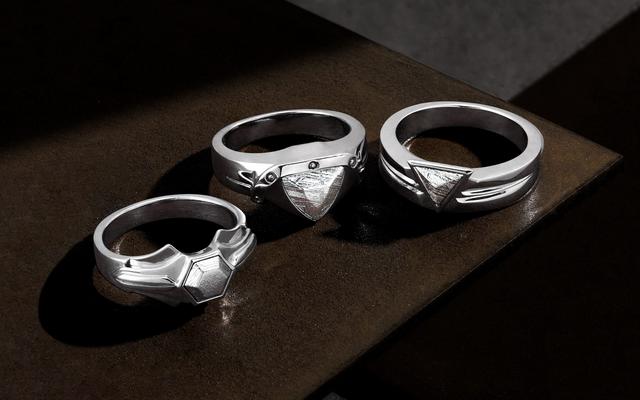
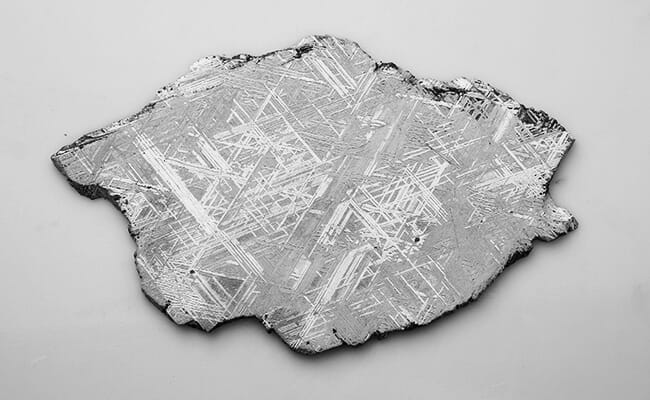
The spherical part of the necklace features a Swedish Muonionalusta Meteorite. This meteorite necklace is shaped like the Moon, inspired by the beautiful sight of a lunar eclipse. AWNL also offers a matching meteorite ring to complete the classic set. Meteorites from space can help manifest your wishes, especially during the powerful energy of a lunar eclipse.
AWNL Star & Moon Swedish Meteorite Necklace

During a total lunar eclipse, the sky without moonlight makes the stars clearer than ever. The design of this necklace is inspired by the star-studded night sky during an eclipse, reminding us that even in the darkest moments of life, there is starlight to guide the way.
AWNL Star Wishing Meteorite Necklace

The center sphere features a Swedish Muonionalusta Meteorite, and the design itself is inspired by the beautiful lunar eclipse. It is adorned with engraved Nordic runes, which are powerful symbols of magic. At a special time like a lunar eclipse where cosmic energy converges, wearing this necklace can enhance the power of manifesting wishes.
A lunar eclipse provides better access to inspiration and enlightenment, opening channels to receive higher-frequency spiritual waves. During this time, beneficial information is better internalized. These are the powerful effects of a lunar eclipse; I hope you can make good use of them during the next one.