

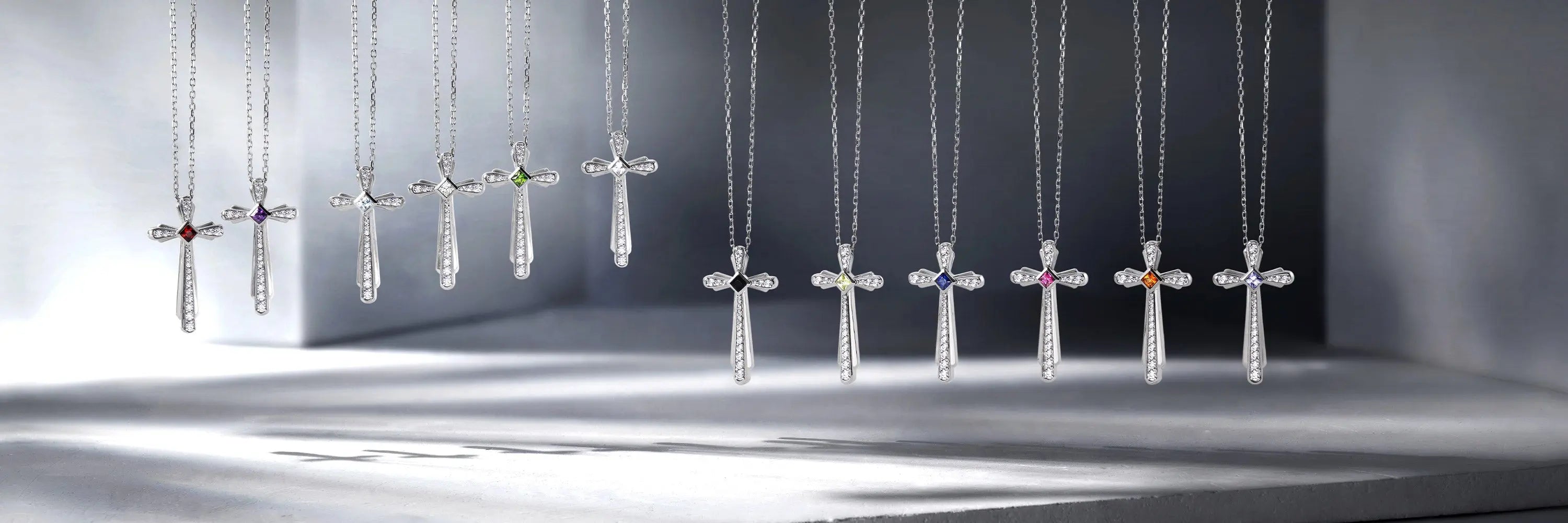
The Intersection of Faith and Fashion: Why Has the Cross Become an Eternal Accessory Choice?
The Cross: An Eternal Symbol Swinging Between Faith and Fashion
From Sacred Symbol to Fashion Statement
Strolling through the streets of Taipei’s Eastern District or Hong Kong’s Central, you will easily find the cross presented in various forms: from delicate diamond necklaces to vintage silver earrings, and even artistic tattoo patterns. This symbol, which has existed for over two thousand years, has now transcended simple religious boundaries, radiating unprecedented cultural brilliance in contemporary society.
Where does the charm of the cross lie? Why has it remained invincible amidst the changing tides of trends?
Cross Jewelry in History—A Material Expression of Faith
"Jewelry is not just decoration, but a witness to its time."
The history of the cross as a jewelry element can be traced back to the Byzantine period, when craftsmen used gold as a base, inlaying rubies, emeralds, and other gemstones to create magnificent sacred objects. By the Victorian era, the cross had become an essential element of mourning jewelry, symbolizing both remembrance of the departed and the hope for eternal life.

Walters Art Museum Byzantine Cross Jewelry
These historical contexts not only enrich the cultural depth of the cross but also provide endless sources of inspiration for modern designers. Have you noticed that in recent years, many works by local designers often feature cross designs infused with Eastern aesthetics? This is precisely the spark of creativity brought about by cultural integration.
The Duality of the Symbol—A Balance Between Sacred and Secular
"Wearing a cross is not a religious declaration for me, but a cultural identity. It reminds me to keep my heart at peace, especially when work pressure is high."
This view is quite common among the younger generation. According to a 2023 survey, more than 40% of consumers aged 25-35 in Taiwan own at least one piece of cross accessory, yet only about 15% of them identify as Christian. This data reflects that the cross has transcended its religious meaning to become a cross-cultural spiritual symbol.
As the cross moves from church niches to fashion runways, does it still retain that sacredness? Perhaps this is exactly where its charm lies—finding a balance between the sacred and the secular, becoming a bridge connecting different cultures and beliefs.
Design Innovation: From Traditional to Avant-Garde
The design language of cross jewelry is incredibly rich! From Gothic-style crosses to elegant pavé-set pieces, and even innovative designs incorporating Taiwanese indigenous elements, the cross, with its simple yet symbolically charged form, has become an excellent medium for designers to unleash their creativity.
The choice of materials is also constantly expanding: in addition to traditional precious metals, environmentally friendly materials like recycled silver, experimental materials like bioplastics, and even smart jewelry combining technological elements have injected new vitality into the cross.

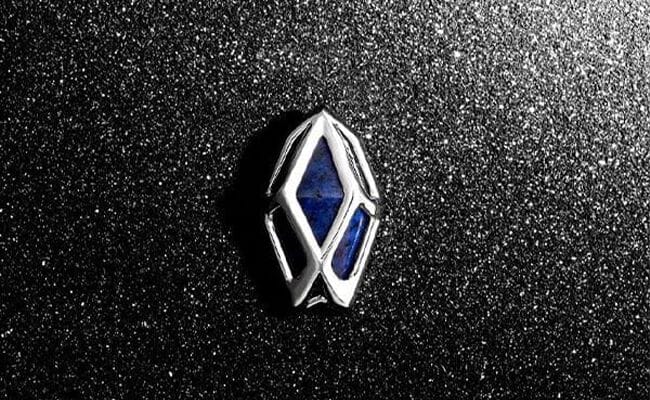
AWNL Dumortierite Sea Shadow Cross Necklace
Are you curious why the cross can adapt so flexibly to various design styles? This is inseparable from its simple and symmetrical shape. It is precisely this geometric balance and beauty that allow it to find admirers across different cultural backgrounds.
An Eastern Perspective: Cultural Appropriation or Creative Fusion?
In East Asian society, the acceptance process of the cross follows a different trajectory than in the West. Hong Kong designer Wong Chi-ming once stated, "For us, the cross is first an aesthetic symbol, and only then a religious one. This gives us greater freedom in design."
This perspective reveals an interesting phenomenon: when a symbol crosses cultural boundaries, its meaning often undergoes a subtle shift. In Japan’s visual-kei rock culture, the combination of the cross with traditional kimono elements has created a unique aesthetic style.
In South Korea, the pairing of crosses with hanboks has become an emerging fashion trend; while in Taiwan, cross designs incorporating indigenous patterns are receiving increasing attention.
Is this cultural appropriation? Or creative fusion? As we appreciate these designs, it is worth considering: how do we maintain respect for the original meaning of cultural elements while borrowing them?
The Cross in the Digital Age: Virtual Jewelry and NFTs
With the rise of the metaverse concept, the cross has also entered the digital realm in a brand-new form. Virtual jewelry designer Lin Shu-hao shares, "In digital spaces, we can break through physical limitations to create cross designs that are difficult to realize in reality, such as dynamic crosses that change color according to the wearer's mood."
In 2023, a digital cross NFT artwork combining traditional Taiwanese temple elements was sold at an international auction for the equivalent of NT$2.5 million, sparking widespread discussion in the art and jewelry communities. This event marks the official entry of the cross symbol into the field of digital collecting and provides new ideas for the modern transformation of traditional cultural symbols.
Have you ever wondered whether the sacredness of a religious symbol remains when it exists in the form of digital art? This question may not have a standard answer, but it is this constant reflection and exploration that drives the evolution of cultural symbols.
Reflection: Innovation within Respect
When we appreciate, wear, or design cross jewelry, we might want to consider this: how do we inject new contemporary meaning into the symbol while respecting its original significance?
Perhaps the answer lies in sincere cultural dialogue and understanding. When Eastern and Western cultures, tradition and modernity, and faith and fashion converge on this small symbol, what we see is not just an exquisite accessory, but a microcosm of human cultural exchange and innovation.
The cross necklace you are wearing is more than just decoration; it is a bridge connecting the past to the future, and linking different cultures and beliefs. In this sense, the cross has truly become an eternal symbol—not because of its immutability, but because of its constant evolution.