

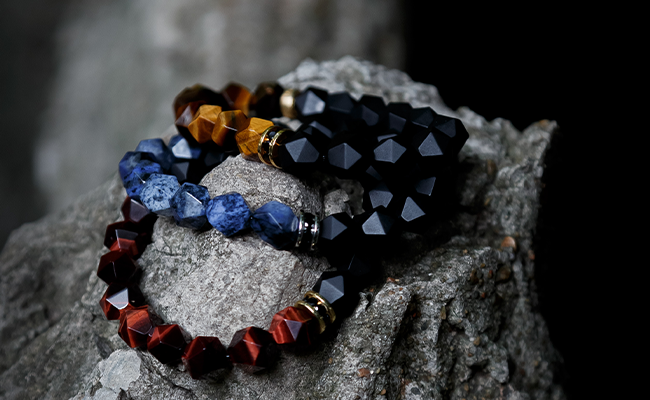











Natural Stone Measurement Standards
Methods for Measuring Bead Size
In the industry, there are two primary methods for measuring bead size:
1. Outer Diameter Measurement
- Measurement location: Measure the diameter at the widest part of the bead
- Characteristic: May be affected by the irregular shape of the bead
2. Hole-to-Hole Measurement
- Measurement: the distance between the two drill-hole openings
- Characteristic: Avoids irregularities around the drill holes for more precise measurement
We generally use the average hole-to-hole measurement when selecting beads, for greater consistency and a closer reflection of how the finished bracelet sits when worn.


Natural Variations in Natural Stone
During their formation, natural stones are influenced by geological environments, pressure, temperature, and other natural factors, giving each stone unique characteristics:
- Crystal structure variations: Different densities in different parts of the crystal
- Cutting characteristics: Variations in hardness in natural stone lead to subtle differences during hand-cutting
- Polishing process: Hand-polishing ensures quality but results in natural, subtle variations
Our Quality Standards:
- Standard size tolerance: ±2.5mm
- Measurement standard: average hole-to-hole measurement
- Quality control: Rigorous selection to ensure visual harmony across each batch of beads
Effect on Wearability
Only synthetic materials can achieve perfectly uniform sizes without any natural variation. By choosing high-quality materials, we select beads that are visually harmonious despite their natural variations:
- Comfortable to wear: Even size distribution ensures comfort
- Natural aesthetic: Subtle differences highlight the authenticity of the natural stone


Join Our Circle
Subscribe for new arrivals, restocks and member-only offers.
